

How to Store Perfumes Properly to Make Them Last Longer

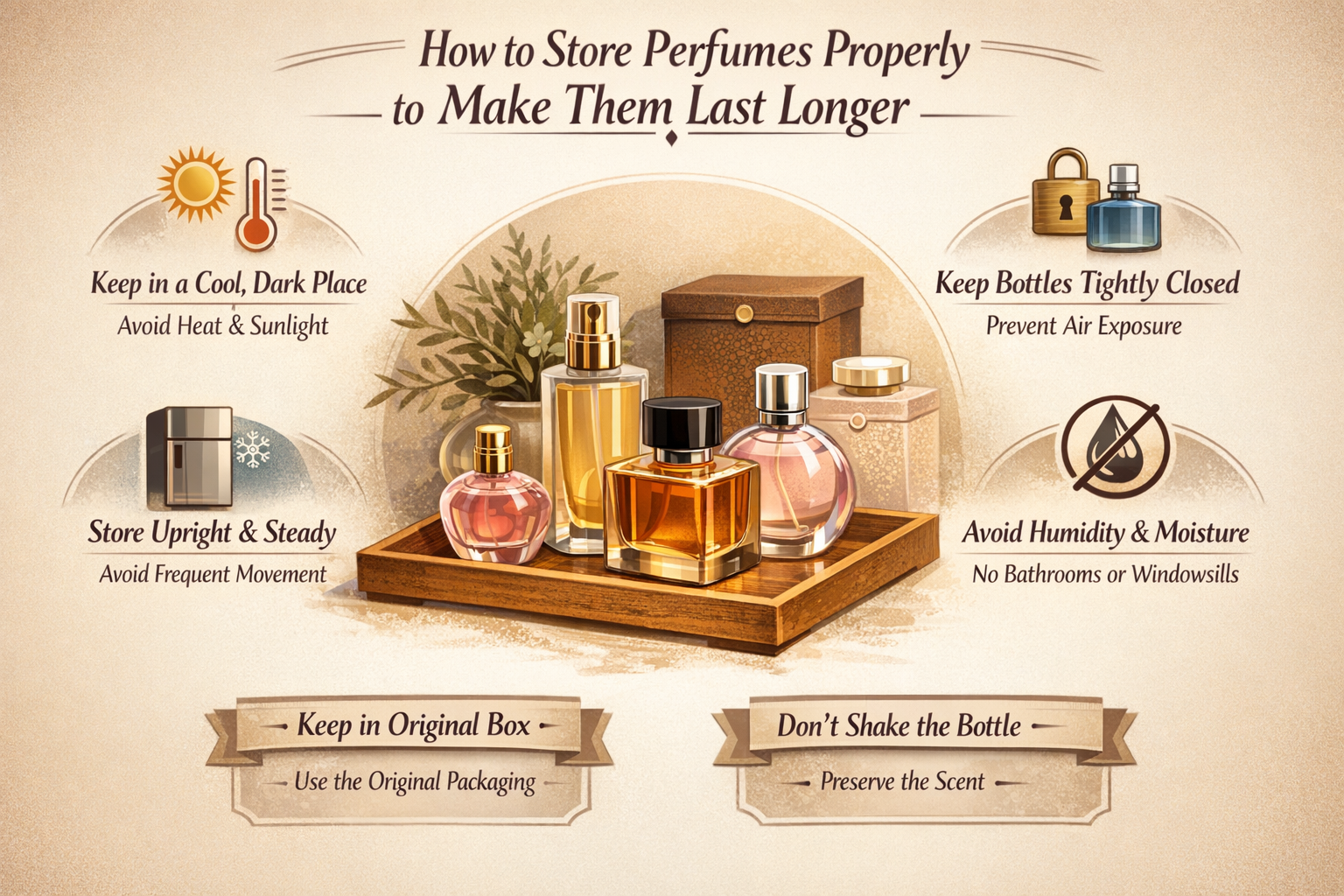
Perfume is an investment in personal style, mood, and identity. Whether you own a single signature scent or a growing collection of fragrances, proper storage is essential to preserve their quality and longevity. Many people unknowingly shorten the lifespan of their perfumes by exposing them to heat, light, air, and humidity—all of which can break down delicate fragrance compounds.
If you have ever noticed your favorite scent smelling slightly off, weaker than before, or even changing color, improper storage is often the reason. Understanding how to store perfumes correctly ensures that every spray smells just as beautiful as the day you bought it.
This comprehensive guide explores everything you need to know about perfume storage, from environmental factors to practical tips and common mistakes.
Why Proper Perfume Storage Matters
Perfumes are made up of volatile aromatic compounds, essential oils, alcohol, and fixatives. These ingredients are sensitive to environmental conditions. When exposed to unfavorable elements, the chemical structure of a fragrance can change, leading to:
- Altered scent profile
- Reduced longevity
- Discoloration
- Complete spoilage
Unlike some beauty products, perfumes do not simply “expire” overnight. Instead, they gradually degrade over time—especially when stored incorrectly.
Proper storage slows down this degradation process, allowing your perfume to maintain its original scent and performance for years.
The Four Biggest Enemies of Perfume
To store perfumes effectively, you need to understand the key factors that damage them.
1. Heat
Heat is one of the most damaging elements for perfumes.
How Heat Affects Perfume:
- Breaks down chemical bonds in fragrance oils
- Speeds up evaporation of alcohol
- Alters the balance of notes
When exposed to high temperatures, a perfume can lose its freshness and develop a flat or sour smell.
Ideal Practice:
- Store perfumes at a consistent, cool temperature
- Avoid placing them near windows, heaters, or electronics
A stable environment is more important than a cold one. Frequent temperature fluctuations can be just as harmful as constant heat.
2. Light (Especially Sunlight)
Light, particularly ultraviolet (UV) rays, can degrade perfume molecules.
Effects of Light Exposure:
- Causes oxidation
- Alters scent composition
- Leads to discoloration (often yellowing or darkening)
Even beautifully designed bottles are not always protective. Clear glass bottles are especially vulnerable to light damage.
Ideal Practice:
- Keep perfumes in dark places
- Store them in drawers, cabinets, or boxes
- Retain original packaging if possible
3. Air (Oxygen Exposure)
Air exposure leads to oxidation, a chemical reaction that changes the fragrance over time.
What Happens During Oxidation:
- Top notes weaken or disappear
- Scent becomes dull or “off”
- Overall balance is disrupted
Every time you open a bottle, air enters and interacts with the liquid.
Ideal Practice:
- Always close the cap tightly after use
- Avoid shaking the bottle unnecessarily
- Use spray bottles instead of open dab bottles when possible
4. Humidity
Moisture in the air can negatively impact perfumes, especially when combined with heat.
Effects of Humidity:
- Breaks down fragrance structure
- Encourages contamination
- Weakens scent performance
Bathrooms are one of the worst places to store perfumes because of frequent humidity and temperature changes.
Ideal Practice:
- Store perfumes in dry areas
- Keep them away from bathrooms and kitchens
The Best Places to Store Perfumes
Choosing the right storage location can significantly extend the life of your fragrances.
1. Bedroom Drawers
A drawer in your bedroom is one of the safest places to store perfumes.
Why It Works:
- Dark environment
- Stable temperature
- Minimal humidity
You can even organize your perfumes in sections or trays to keep them upright and protected.
2. Closets or Wardrobes
Closets provide a cool, dark, and consistent environment.
Benefits:
- Protection from light
- Limited exposure to heat
- Reduced air movement
For collectors, this is an excellent long-term storage option.
3. Perfume Boxes
Keeping perfumes in their original boxes is highly recommended.
Advantages:
- Shields from light
- Adds an extra layer of insulation
- Helps maintain temperature stability
Many people discard packaging, but it actually plays an important role in preservation.
4. Refrigeration (With Caution)
Some people store perfumes in refrigerators, but this approach requires care.
Pros:
- Low, stable temperature
- Slows chemical reactions
Cons:
- Risk of condensation
- Exposure to food odors
If you choose this method, use a separate compartment or sealed container to protect the fragrance.
Places You Should Never Store PerfumE
1. Bathrooms
Despite being a common choice, bathrooms are one of the worst places for perfume storage.
Why:
- High humidity
- Frequent temperature changes
- Steam exposure
These conditions accelerate perfume degradation.
2. Near Windows
Sunlight and heat exposure can quickly damage fragrances.
Even indirect sunlight over time can cause noticeable changes.
3. Inside Cars
Cars experience extreme temperature fluctuations.
Risks:
- Heat during the day
- Cold at night
- Rapid expansion and contraction of liquid
This can ruin a perfume in a short period.
4. Open Shelves with Direct Light
While aesthetically pleasing, open displays expose perfumes to harmful elements.
If you want to display your collection, consider UV-protected cabinets.
How to Store Perfume Bottles Correctly
Keep Bottles Upright
Always store perfume bottles in an upright position.
Why:
- Prevents leakage
- Reduces air exposure
- Maintains seal integrity
Avoid Shaking the Bottle
Shaking introduces air bubbles, which can speed up oxidation.
Perfume does not need mixing like some liquids.
Keep the Cap On
Leaving the cap off allows air to enter and evaporate the fragrance.
Always secure the cap tightly after each use.
Travel Storage Tips
When traveling, perfumes are exposed to movement, temperature changes, and pressure.
Best Practices:
- Use travel-sized atomizers
- Keep bottles in padded pouches
- Avoid placing them in checked luggage if temperatures are extreme
Atomizers reduce the risk of exposing your main bottle to air and damage.
Shelf Life of Perfume
Most perfumes last between 3 to 5 years, but proper storage can extend this.
Signs Your Perfume Has Gone Bad:
- Change in color (darker or cloudy)
- Sour or metallic smell
- Reduced intensity
Some fragrances, especially those with strong base notes like woods or resins, may even improve slightly with age if stored well.
Tips for Collectors
If you own multiple perfumes, organization becomes even more important.
Rotate Usage
Using your perfumes regularly prevents long-term stagnation.
Label Purchase Dates
Keeping track of when you bought each fragrance helps monitor its age.
Avoid Overstocking
Buying more than you can use increases the risk of perfumes expiring before use.
Glass vs Plastic Bottles
Most perfumes come in glass bottles for a reason.
Glass Bottles:
- Non-reactive
- Preserve scent integrity
- Better for long-term storage
Plastic Containers:
- Can react with fragrance oils
- Allow slow air exchange
- Not ideal for storage
Always keep perfumes in their original glass bottles whenever possible.
Decanting and Its Impact
Decanting involves transferring perfume into smaller containers.
Pros:
- Convenient for travel
- Reduces exposure of main bottle
Cons:
- Introduces air
- Risk of contamination
- Potential scent alteration
If decanting, use high-quality, airtight atomizers.
Minimalist Storage Routine
If you prefer simplicity, follow these core rules:
- Keep perfumes in a cool, dark place
- Avoid heat, light, and humidity
- Close bottles tightly
- Store them upright
Even these basic steps can dramatically extend perfume life.
Final Thoughts
Proper perfume storage is not complicated, but it does require awareness and consistency. Heat, light, air, and humidity are the main factors that degrade fragrances, and avoiding them can preserve your perfume’s quality for years.
By choosing the right storage location, handling bottles carefully, and avoiding common mistakes, you can ensure that your favorite scents remain fresh, balanced, and long-lasting.
Perfume is more than just a fragrance it is an experience. And like any valuable possession, it deserves proper care. When stored correctly, your perfume will continue to deliver the same elegance and impact every time you wear it, making every drop truly worth it.